 Laundry and dry clean
Laundry and dry clean
Laundry and dry clean
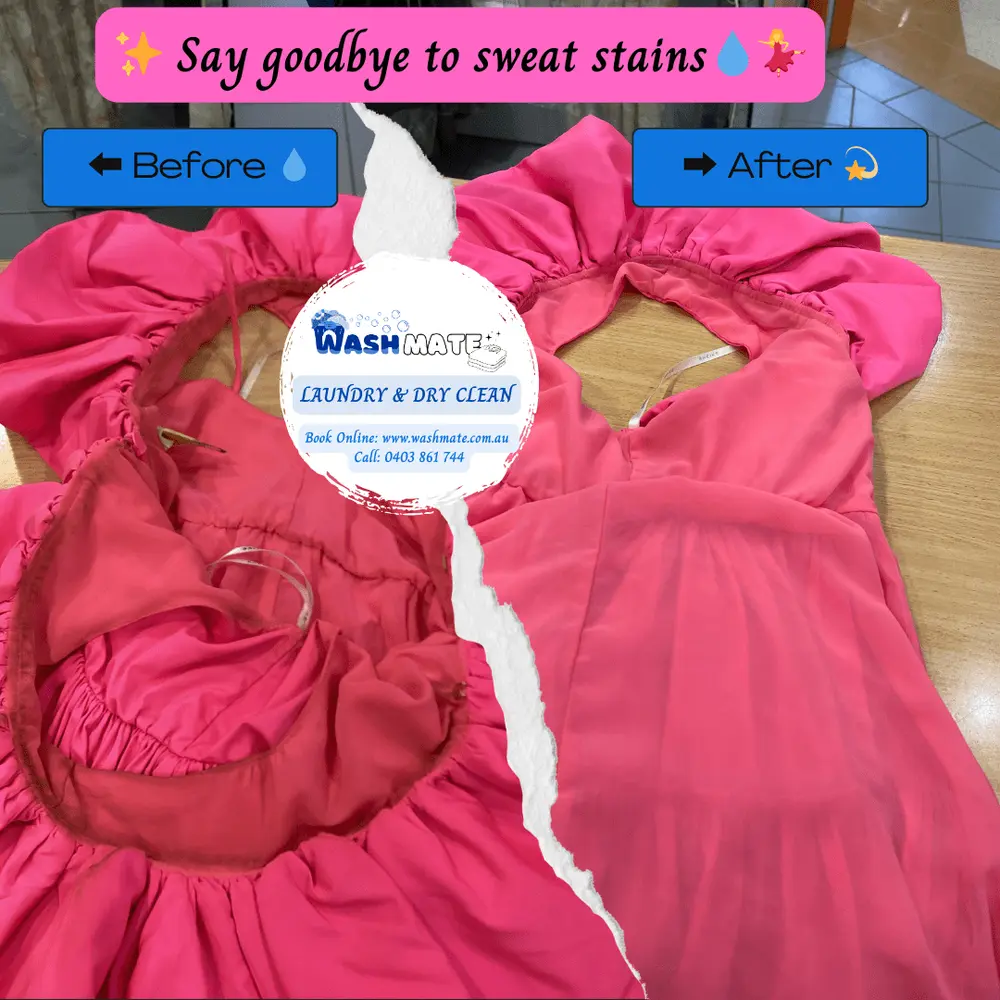
A stain is only permanent once someone has set it. That is the part most people get wrong at home — scrubbing, hot water and the wrong product turn a removable mark into a lasting one. Professional stain removal in Sydney works because each stain type is identified first and treated with the right chemistry, at the right temperature, before any general cleaning happens.
WashMate handles stain treatment at our Surry Hills and Leichhardt stores, and it is the service our Google reviews mention most often. For a quote, email photos of the garment and its care label to info@washmate.com.au.
Most stains come out. Some do not. Long-set dye stains, heat-set marks and anything that has already bleached the fabric underneath may be improved rather than erased, and old perspiration can permanently weaken fibres around the underarm. We will tell you what we expect to achieve before we start rather than after, and if a garment is not worth treating we will say so.
Stain work is included in normal garment pricing — a business shirt from $13, a two-piece suit from $37 — with specialist treatment quoted after inspection. See the full price list.
The same coffee spill behaves differently on cotton, wool and silk. Cotton is robust and tolerates a wider range of treatments. Wool is protein-based, so it reacts badly to alkaline products and heat, and it felts if agitated. Silk is both protein-based and dye-sensitive, meaning an aggressive treatment can lift the colour along with the stain. Synthetics such as polyester resist water-based stains well but hold oil stubbornly, which is why a salad dressing mark on a polyester blouse is often harder to shift than the same mark on cotton.
Structured garments add another layer. A suit jacket has an interlining, shoulder padding and a canvas front that all react differently to moisture. Treating a stain on the outer fabric without accounting for what sits underneath is how garments come back with a water ring or a collapsed shoulder — which is precisely why solvent cleaning and a proper press matter on tailored pieces.
Sometimes. Fresh stains have a much higher success rate, but many older marks can still be significantly improved. We assess the garment first and tell you what to expect before treatment.
Routine stain treatment is part of standard garment cleaning. Specialist or extensive treatment is quoted after inspection, since it depends on the fabric, the stain and how long it has been there.
Blot with a clean white cloth, avoid hot water, and do not rub or iron the area. Then bring it in as soon as you can.
Yes. Silk, wool, beaded and structured garments are all handled, with wedding dress cleaning and preservation starting from $350.
Yes. Pickup and delivery across Sydney metro is a flat $15 per order, seven days a week.
Follow @washmate.sydney on Instagram for before-and-after transformations and garment care tips.
Tap below to book your pickup online, or send us a quick email and we will come back with a free, no-obligation quote.