 Laundry and dry clean
Laundry and dry clean
Laundry and dry clean
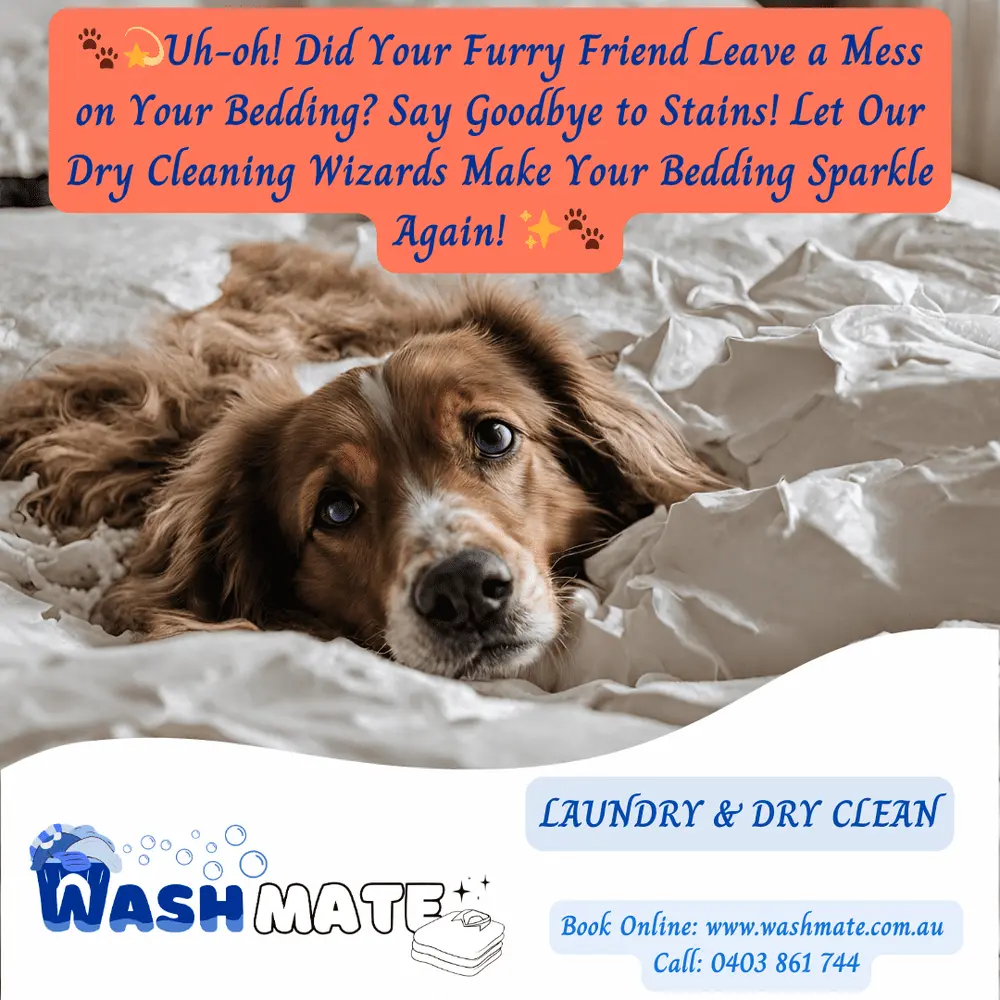
Pet bedding is the most-used textile in most Australian homes and the least often washed. A dog bed absorbs hair, dander, saliva, outdoor dirt, tracked-in grass and skin oils, and unlike a doona it rarely gets a proper clean. Pet bedding cleaning in Sydney deals with all of that properly — and with the smell that a home machine tends to move around rather than remove.
WashMate cleans dog beds, cat beds, blankets, covers and pet throws at both Sydney stores. For a quote, email a photo of the item to info@washmate.com.au.
Commercial machines have the drum capacity to move a large bed properly, so water and detergent reach the core. Hair is removed before washing rather than during it. Odour is treated at the bacterial source, and drying is controlled and complete — which is the step that matters most on foam and thick padding, because trapped moisture is what turns a clean bed musty again within a week.
Pet dander is one of the most common indoor allergy triggers in Sydney homes, and pet bedding concentrates it. Dust mites feed on the skin flakes in it too, and they thrive in the humidity we get through summer. If someone in the house has hay fever or asthma, regular hot-cycle cleaning of pet bedding makes a measurable difference — the same logic that applies to washing your own bedding and curtains during pollen season.
Pet bedding is priced per item after inspection, since size, filling and condition vary enormously. Pickup and delivery across Sydney metro is a flat $15 per order, which saves carrying a large bed across town.
Dander is the main one — microscopic skin flakes that both cats and dogs shed constantly, and the actual trigger behind most pet allergies rather than the hair itself. On top of that sits saliva protein from grooming, sebum from the coat, tracked-in pollen and soil, and in Sydney’s humidity, mould spores that settle into damp padding. Hair is simply the visible part of a much larger picture.
This is why a bed can look reasonably clean and still smell within a day of being aired. The visible hair comes off easily; the dander, oils and bacteria bound into the padding do not, and they are what generate odour as they break down.
Yes. Commercial machines have the capacity to clean a large bed properly, and controlled drying makes sure the foam core dries fully rather than staying damp inside.
In most cases yes, because odour is treated at its bacterial source rather than masked with fragrance. Very long-standing urine saturation in foam is sometimes not fully recoverable, and we will tell you before we start.
Every two weeks for a heavy shedder or an allergy household, monthly for a typical indoor pet, and immediately after illness or fleas.
It is quoted per item after inspection, because size, filling and condition vary so much. Email a photo for an approximate quote.
Yes. Pickup and delivery is a flat $15 per order across Sydney metro, which is far easier than transporting a bulky bed yourself.
Follow @washmate.sydney on Instagram for before-and-after transformations and garment care tips.
Tap below to book your pickup online, or send us a quick email and we will come back with a free, no-obligation quote.