 Laundry and dry clean
Laundry and dry clean
Laundry and dry clean
Musty clothes and humidity in Sydney go together because moisture never fully leaves the fibre, and the bacteria and mould spores already in the fabric start working on it. It is not a washing problem and more detergent makes it worse. The fix is removing the source, then changing how the wardrobe breathes. For a quote, email info@washmate.com.au.
Sydney humidity climbs from October and stays high until March. That is when wardrobes start to smell, towels go sour between uses, and a shirt that was clean on Monday smells stale by Wednesday. This guide explains what is actually happening and what works.
Microbial growth feeding on moisture and residue. Every fabric holds a little water, and in humid air it holds more. Add body oils, detergent residue and fabric softener, and you have food. Bacteria and mould spores do the rest, and the smell is their waste. That is why the smell comes back after washing if the residue stays, and why it is strongest in a closed wardrobe.
Because detergent residue is part of the food supply. Overloaded machines and heavy doses leave surfactant trapped in the weave, especially in towels and thick cotton. That residue holds moisture against the fibre and feeds the bacteria. Fabric softener compounds it by coating the fibres in a waxy film that stops them drying properly. Less detergent, fuller rinse, smaller loads.
They are thick, they stay damp and they are hung in the most humid room in the house. A bath towel that never fully dries between uses is a continuous culture. The smell appears within a day in summer and disappears for about ten minutes after washing before returning, which is the classic sign of residue rather than dirt. A proper commercial wash at the right temperature strips the build-up.
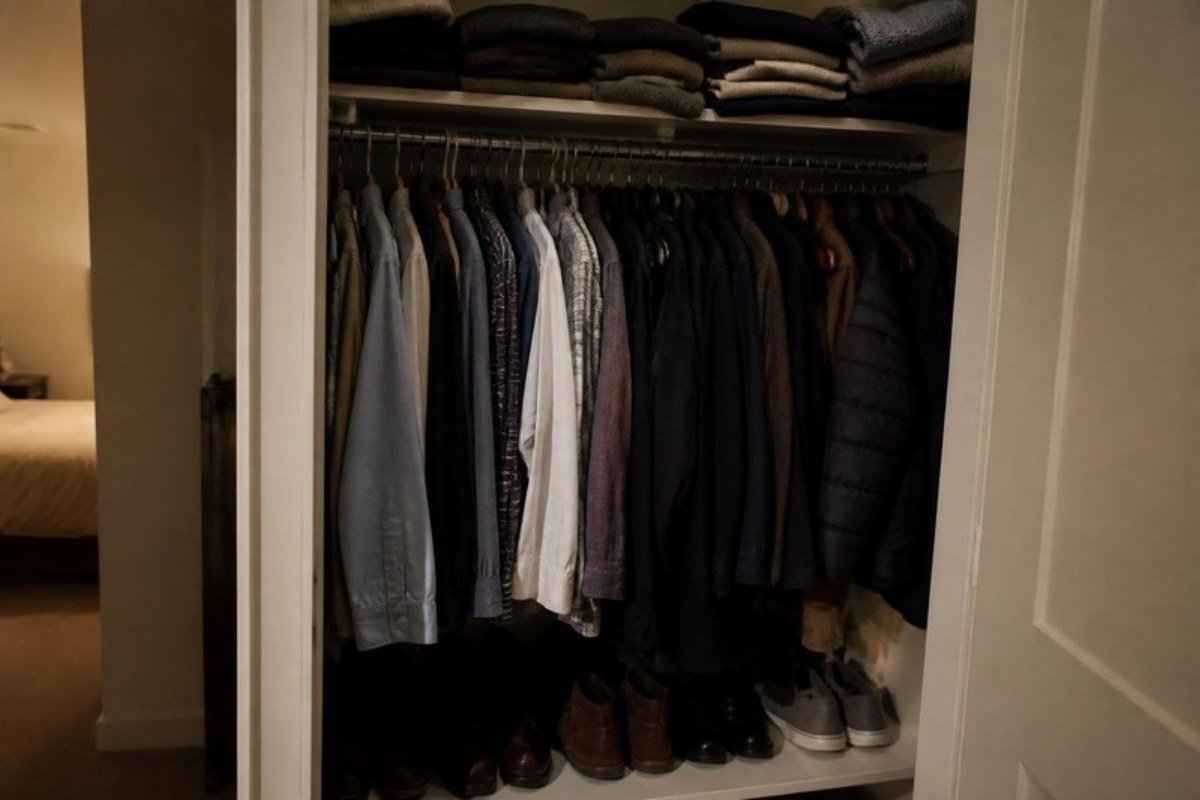
Still air and no light. A packed wardrobe has no airflow, so humidity sits between the garments. Clothes put away slightly damp raise it further, and anything stored dirty adds the oils. Shoes and bags at the bottom hold moisture too. The result is a smell that transfers to everything, including clean clothes hung next to the culprit.
Look for speckling. A musty smell with no visible marks is usually bacterial and comes out completely. Black or grey speckles mean mould has taken hold in the weave, and that is a different job. Mould that has weakened the fibre cannot be reversed, and the fabric stays marked even after the mould is gone. Our mould removal guide covers the treatment side in detail.
Do not spray fabric freshener over it, which adds perfume to the residue and feeds the problem. Do not store anything in plastic dry-cleaning film long term, because it holds moisture against the garment. Do not tumble a musty item dry on high heat, which bakes the smell in. And do not put a damp load in a basket overnight in summer, because that is enough time for the smell to start.
Commercial machines run hotter and rinse harder than domestic ones, which strips the residue that home washing leaves behind. Items are dried properly rather than air-dried in a humid room, and dry cleaning uses solvent rather than water for garments that cannot take a hot wash. Laundry is $9.90 per kilo, weighed on arrival, and the most common outcome is that one wash resets a problem people have been fighting for months.
Everyday clothing, towels and bed linen go as laundry at $9.90 per kilo, weighed on arrival, so you pay for exactly what you send. Dry cleaning for items that cannot take a hot wash starts from $28 for a dress and $37 for a two-piece suit. Doonas and blankets from $45. Pickup and delivery runs across Sydney metro seven days from $15 per order. See the pricing page or our laundry service.
The reason this problem recurs is that people treat one item instead of the batch. Send the towels, the bed linen and whatever is carrying the smell in one collection, air the wardrobe while it is away, and put everything back dry. Our storage guide covers packing clothes away without this happening. If it is fabric, ask.
It helps and it does not replace cleaning. Lowering room humidity slows new growth, which is genuinely useful in a wardrobe or a closed bedroom over summer. What it cannot do is remove the residue and oils already in the fabric, which is what the bacteria are feeding on. Run one alongside a proper reset rather than instead of it, and keep it away from the clothes themselves.
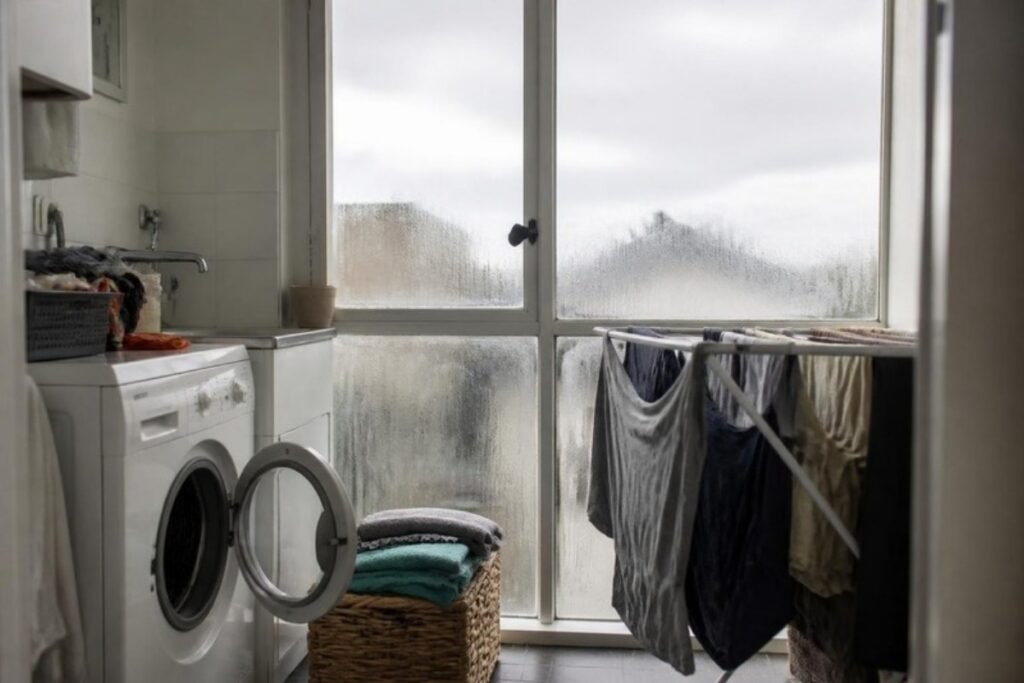
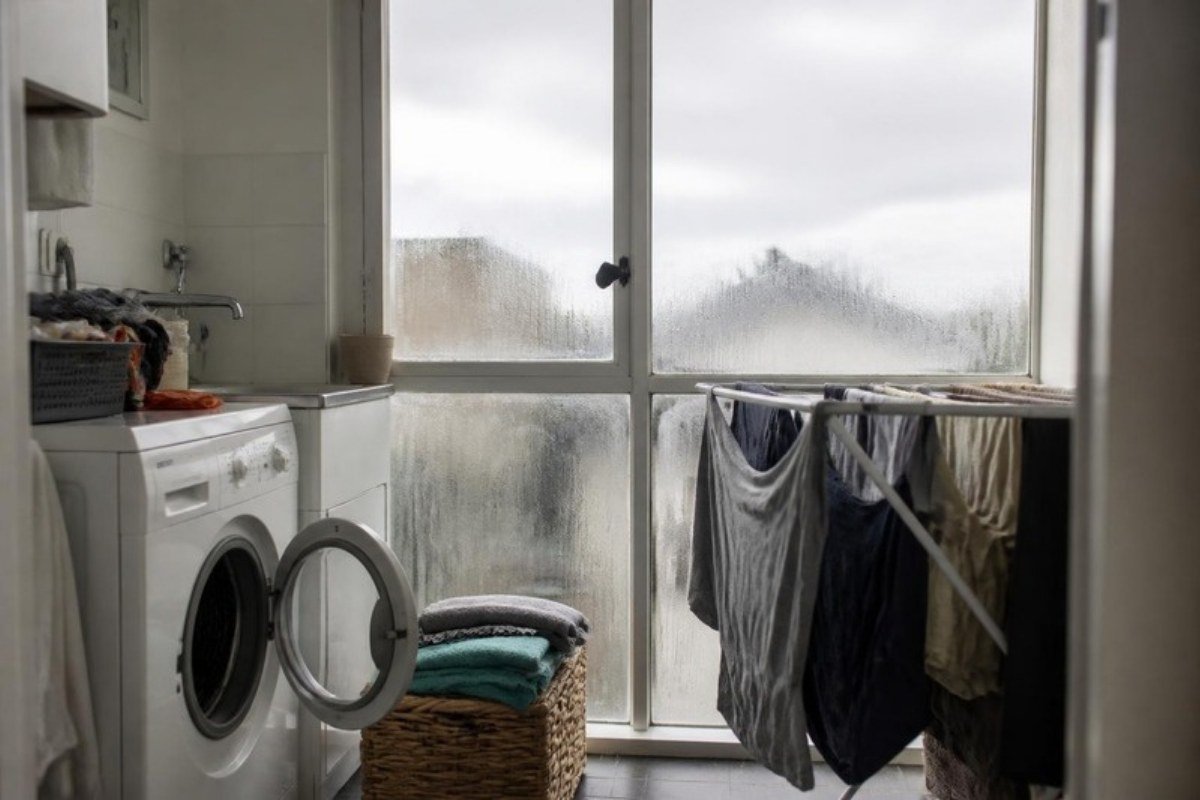
Considerably. Musty clothes and humidity in Sydney are worst in ground-floor and semi-basement flats, in rooms with one window, and in any home where washing is dried indoors. Drying a load inside releases litres of water into the air, which then settles into everything else in the room. Older buildings without extraction and apartments with bathrooms that vent into the ceiling cavity are the other common pattern.
Humidity keeps moisture in the fibre, and bacteria feed on that moisture plus body oils and detergent residue. The smell is their waste. It is strongest in closed wardrobes and in thick items like towels.
Because the residue is still there. Heavy detergent doses and fabric softener leave a film that holds moisture and feeds bacteria. A hotter commercial wash with a full rinse strips the build-up properly.
Not always. A smell with no visible marks is usually bacterial and comes out completely. Black or grey speckling means mould in the weave, which is harder, and mould that has weakened fibres cannot be reversed.
Dry everything completely before putting it away, thin the wardrobe so air moves, use cotton storage bags rather than plastic, and open the doors for an hour on a dry day. Deal with the source item rather than spraying.
Laundry is $9.90 per kilo, weighed on arrival, and dry cleaning starts from $28 for a dress. Pickup and delivery runs across Sydney metro from $15 per order, so a full reset of towels and linen is one booking.
Sydney humidity runs from October to March, and so does the smell. Strip the residue properly once and the wardrobe stops fighting you. Laundry is $9.90 per kilo weighed on arrival, dry cleaning from $28, pickup and delivery across Sydney metro seven days from $15 per order, and every price is confirmed after inspection. Book online, email info@washmate.com.au or call 0403 861 744.
Follow @washmate.sydney on Instagram for before-and-after garment transformations, care tips and a look behind the scenes at how our Sydney team works.