 Laundry and dry clean
Business shirt care in Sydney starts from $13 a shirt for dry cleaning at WashMate, or from $8 for wash and iron, dropping to $5 a shirt at ten or more. For a quote, email info@washmate.com.au
It is 8.15am in late January. You have walked from Wynyard to the office, and the shirt that left home crisp is already sticking to your back. By the end of the day it is creased at the elbows and damp at the collar, and when it comes out of the wash there is a faint yellow shadow under the arms that was not there in spring.
This guide explains what actually causes yellowing, how to slow it down, and how to keep shirts looking sharp through a humid January.
Most antiperspirants contain aluminium compounds. On their own they are fairly harmless to fabric. But combined with the proteins in sweat and left in cotton over many wear-and-wash cycles, they build into a stiff yellow deposit in the underarm area. It is gradual, which is why shirts often look fine for months and then suddenly look tired.
The ring inside a collar is mostly body oil, sunscreen and grime from your neck. These oils oxidise and darken over time, especially when a shirt is worn more than once between washes in hot weather.
Chlorine bleach is the instinctive answer to a yellowing white shirt, but it reacts with the proteins in sweat stains and can deepen the yellow rather than lift it. Hot water and the tumble dryer can also set protein and oil stains permanently.
Our corporate clothing care guide covers how to build a workwear rotation that lasts.
Wash pale shirts in warm rather than hot water, and pre-treat collars and underarms before every wash. Skip the chlorine bleach. Dry on a hanger in the shade rather than direct sun, which can yellow some cotton finishes, and iron while slightly damp for the crispest result.
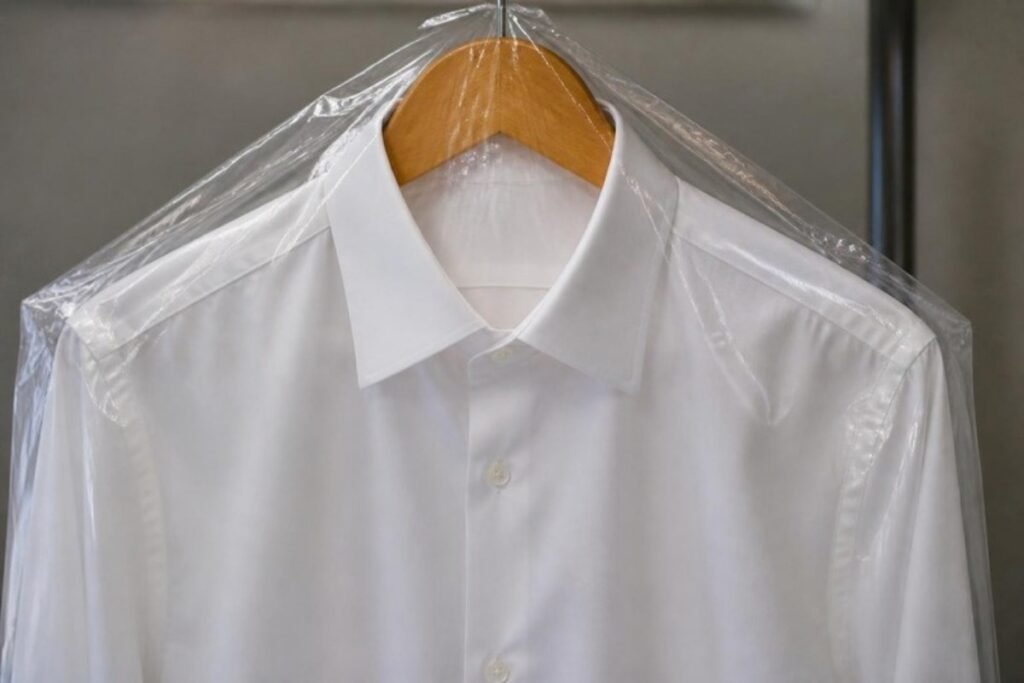
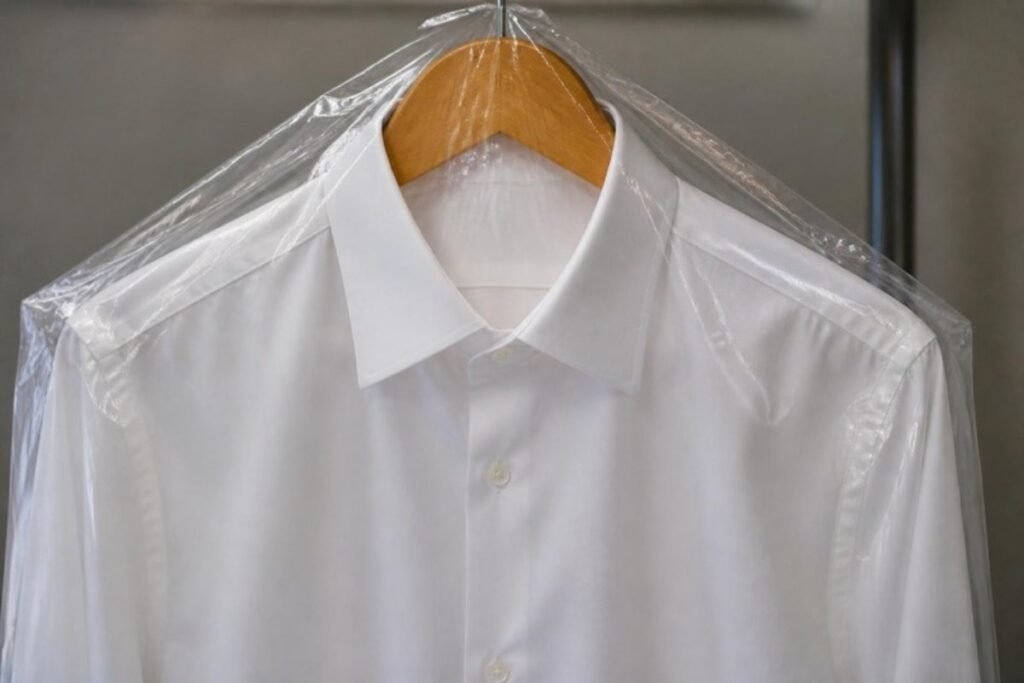
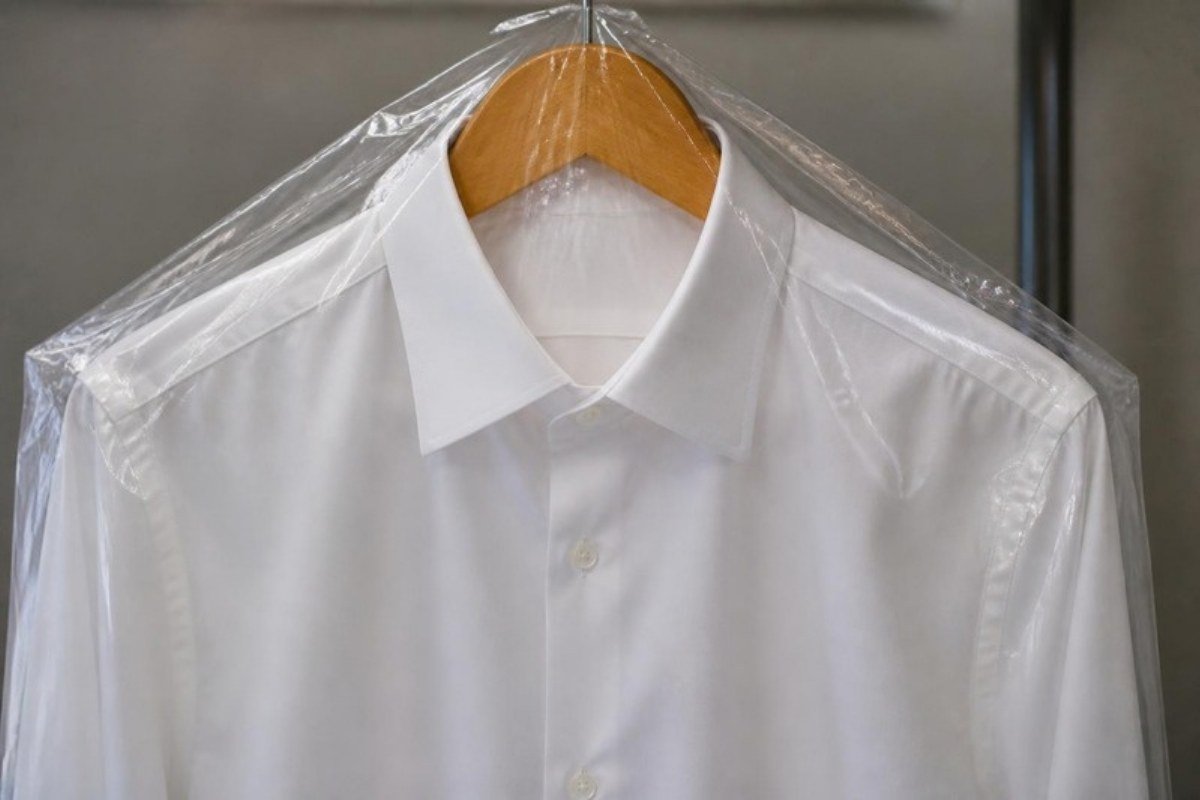
If you go through ten shirts a fortnight, that is hours of ironing in the hottest months of the year. Professional shirt ironing or wash and iron returns them pressed and on hangers, ready to wear. Current rates are on the pricing page.
Summer is when a regular collection pays off most. Rather than running small loads every night, put a week’s shirts in one bag. Collection is contactless from home or the office. Pickup and delivery runs across Sydney metro seven days from $15 per order, and booking online takes about two minutes.
A weekly laundry service means a full rotation always comes back ready, which is what actually stops the midnight ironing.
Honestly, the daily wash of a cotton shirt is fine at home. Professional help earns its place when yellowing has already set in, when collars have a persistent ring, or for premium shirts you want to keep looking new.
Built-up antiperspirant deposits need targeted pre-treatment rather than a stronger wash. Not every long-established mark comes out completely, but catching it early gives the best chance.
Shirts are priced per item for ironing or wash and iron, and that is usually the better value if you want them back pressed and on hangers. Sending a volume as laundry at $9.90 per kilo works out differently, so the pricing page is worth a look before you decide.
If you are setting up something regular for a whole wardrobe rotation, email info@washmate.com.au and we will quote it on your actual volumes rather than a guess.
It depends what you are buying. For the wash itself, honestly, no: a cotton shirt washes perfectly well at home. What you are actually buying is the pressing, and the fact that ten shirts come back ready to wear instead of waiting on an ironing board.
The second thing you are buying is damage control. A collar ring caught early usually lifts. The same ring after a summer of hot washes often will not, and at that point the shirt is finished regardless of what anyone does to it.
Let antiperspirant dry before you dress. Use less of it.
Then wash after every wear through summer. Warm water, not hot. No chlorine bleach, because it reacts with sweat proteins and deepens the yellow. Dry in the shade instead of direct sun. Finally, rotate five or more shirts so each one dries out fully between wears.
If the ironing is the part of business shirt care in Sydney you resent, hand it over. That is usually the real reason people outsource shirts, and it is a perfectly good one.
A last note on undershirts, because opinion is divided. They do work. The sweat reaches the undershirt instead of the shirt, so the antiperspirant build-up slows considerably. Admittedly they are warm. But on the worst four or five days of a Sydney February, they will save a shirt. Choose a fitted one in cotton. Then it works without showing through.
It is antiperspirant combining with the proteins in sweat and building up in the fibre over many wear-and-wash cycles. It is gradual, so shirts look fine for months and then suddenly look tired. Letting antiperspirant dry fully before dressing, and using less of it, both slow it down.
Usually not, and it often makes it worse. Chlorine bleach reacts with the proteins in sweat stains and can deepen the yellow rather than lift it. It also weakens the fibre. An oxygen-based whitener is safer on most fabrics.
After every wear. In Sydney humidity, re-wearing a shirt that looks clean gives body oils time to oxidise at the collar and cuffs, which is where permanent yellowing starts.
Often, if they are caught reasonably early. They are oxidised body oil rather than surface dirt, so they need a targeted pre-treatment rather than a hotter wash. Long-standing rings that have been through many hot washes may not come out completely, and we will say so before we start.
Put a week of shirts in one bag and get them back pressed and on hangers. We collect from home or the office across Sydney metro seven days from $15 per order. Drop-offs are welcome at Surry Hills and Leichhardt. Book online, email info@washmate.com.au or call 0403 861 744.
Follow @washmate.sydney on Instagram for before-and-after garment transformations, care tips and a look behind the scenes at how our Sydney team works.